Ciaran is a Melbourne-based journalist whose writing has been published by numerous outlets including The Guardian and The Age. His work has been recognised by the Walkley Foundation, Melbourne Press Club and the NSW Premier’s History Awards.
Monash University researchers have developed a world-first app that could dramatically improve the sleep and mood of vital shift workers.
It’s no secret that shift work can be extremely taxing, effecting workers’ sleep cycles, and their mental and physical health. Researchers from the Turner Institute for Brain and Mental Health have developed app called SleepSync to tackle this problem.
SleepSync is the world’s first app that personalises sleep-wake cycles for shift workers to improve their sleep and overall mood.
The research, led by Dr Jade Murray, saw 27 shift workers trial the app over a two-week period. The participants were mainly intensive care and emergency department nurses at high risk of shift work disorder, commonly experienced as insomnia and excessive sleepiness.
SleepSync improved these workers’ total sleep time, ability to fall asleep, sleep quality and perception of recovery on days off. With the app considering each individual’s daily routine, 70 per cent reported it was easier to fall asleep, and more than 80 per cent reported better quality sleep. Participants slept an average of 29 minutes longer each night.
“SleepSync aims to aid behavioural change and provide practical advice to shift workers by providing personalised sleep scheduling recommendations and education,” Dr Murray said.
“This has the potential to improve shift workers’ health and wellbeing and how they function day to day. It also has the potential for development and integration with wearable devices, such as smartwatches, and further helps to minimise the health costs associated with shift work to society.”
The mobile phone app is unique because it is entirely tailored to the individual user by:
incorporating a calendar for work and personal commitments
providing biologically viable recommendations for sleep timing that account for work and social obligations based on the information users enter into the calendar, such as work shifts and important personal activities
daily logging of actual sleep/wake times and mood
Users receive a ‘recovery score’ based on their level of adherence with the recommended sleep times.
Dr Murray said work hours outside the 9 to 5 regime play havoc with the body’s circadian clock. “Shift workers report an increased functional impact of sleep disturbance and misalignment, including impaired alertness and increased sleepiness during wakefulness compared to the general population,” she said.
“Shift workers are also at greater risk of a range of long-term adverse health consequences such as gastrointestinal problems, cardiovascular disease, mood disorders and cancer, as well as the short term increase in the risk of errors, accidents and injuries.”
To date, helping a shift worker to sleep well has largely relied on workplace interventions such as adjusting workplace lighting, scheduled workplace napping, sleep hygiene programs, wellness programs and workplace fatigue management programs.
Co-author Dr Tracey Sletten, of the Turner Institute, said individual workers need evidence-backed ways to optimise their sleep around their work schedule.
“Each person has different underlying biology and specific work patterns, which need to be accommodated in a personalised schedule to help them sleep better,” Dr Sletten said.
Dr Sletten said 67 percent of participants reported that SleepSync was influential in modifying their behaviour and habits, while 82 per cent found the app easy to incorporate into their daily lives.
“They also reported improvements in mood (depression, anxiety and stress), insomnia symptom severity, sleep hygiene and sleep-related daytime impairments.”
The Turner Institute’s research was published in the journal, Digital Health.
Bianca Roberts and Ciaran O’Mahony’s podcast on a women’s sports initiative promoting healing and equality in Rwanda, has been honoured as a finalist at the New York Festivals (NYF) Radio Awards.
The podcast, titled “Felicite Rwemarika: The refugee who became a pioneer for women’s sports in Rwanda”, explores Ms Rwemarika’s development of the Association of Kigali Women in Sports (AKWOS), and her establishment of women’s football programs and Rwanda’s national women’s football league.
One of the world’s most prestigious honours for audio storytellers, the NYF Radio Awards celebrate the best audio programs across a range of platforms including audio books, podcasts, documentaries and music specials.
Roberts and O’Mahony’s work has been nominated in the Sports Podcast category, alongside three audio entries produced by ESPN, the BBC and NPR.
This recognition is an exciting milestone for Roberts O’Mahony Productions, a production house established in partnership between The Jaded Newsman and Bianca Roberts Media. This NYF nominated podcast was the production house’s debut feature, beating entries from long-established and well-resourced media companies across the globe.
The feature was also recently shortlisted in the International Sports Press Association’s (AIPS) Top 20 pieces of Audio reporting in the world.
As the only independent entry among the NYF Radio Awards’ Sports Podcast nominees, Roberts O’Mahony Productions has “punched above its weight”, illustrating its ability to provide original and creative content with the quality and journalistic rigour to match the world’s biggest media companies.
The podcast also serves as a powerful illustration of the benefits of using football as a vehicle for women’s empowerment – a message the producers hope can inspire further sport for change initiatives.
You can find out more about Roberts O’Mahony Productions‘ NYF Radio Awards nomination here. Listen to the full podcast here.
Keep following The Jaded Newsman, Bianca Roberts Media and Roberts O’Mahony Productions for more multi award-winning content.
The Council to Homeless Persons (CHP) is proposing a new funding model that would allow the Victorian Government to convert affordable housing into social dwellings.
Under the plan, the CHP believes the State Government would be able to bridge the gap between the rent costs of affordable and social housing.
New data reveals that renting affordable housing in Victoria costs $11,400 a year more than social housing as the state grapples with a shortfall of social properties.
The Federal Government has committed to build 27,500 affordable housing properties over the next four years. Based on population, Victoria’s share of these dwellings is 7000.
If this proposed model is adopted, the Victorian Government could switch those affordable properties to social dwellings by meeting the $11,400 average annual rental gap between the two categories.
This innovation could allow more flexibility to meet Victoria’s needs, with just 2.9% of all households in social housing – the lowest proportion in Australia.
Affordable housing are properties that charge 80% of market rent, while social housing is 30% of income plus Commonwealth Rental Assistance.
Council to Homeless Persons CEO, Deborah Di Natale, has called for Victorian Housing Minister Colin Brooks, to raise the proposal with federal and state counterparts at this month’s Housing and Homelessness Ministerial Council meeting.
“Despite welcome State Government initiatives like the Big Housing Build, our state is woefully behind when it comes to the level of social housing available,” Ms Di Natale said.
“That’s why we’ve come up with a funding model that gives Victoria the flexibility to convert already promised affordable housing into social dwellings.
“We’re in the midst of the most serious housing crisis in living memory, but that doesn’t mean it can’t be fixed. Unlocking more social housing through investment at both a federal and state level is the key to ending homelessness.”
Photo: One of the first apartment blocks from Victoria’s $5.3 Billion Big Build project. Source: Homeless Australia Twitter page.
Di Natale highlighted that Victoria is currently last among all Australian states and territories when it comes to social housing as a proportion of all housing.
“”If federal investment in social housing to each State is based on population, the State Government needs to continue to chip in or there’s no chance of Victoria getting out of last place.
“We need to do things differently. That’s why we’ve devised a model that lets Victoria top up funding to ensure there is more social housing built. Rents are accelerating at break-neck speed, leaving thousands of Victorians at serious risk of becoming homeless.
“The right investment in social housing can end homelessness. We just need governments to work together and act.”
Homelessness in Victoria has soared by 76 per cent in the past 15 years and 24 per cent in the past five years, according to the most recent Census data.
The Victorian Government’s latest rental report documented a 12.5 per cent increase in median rents over the past 12 months. Rents have risen 16.9% over five years and a staggering 36.4 per cent over the last decade.
Feature image: PHS Community Services Twitter page.
Sport Integrity Australia has moved to strengthen its anti-doping program by signing a partnership agreement with the International Testing Agency (ITA).
The collaboration and service agreement will see Sport Integrity Australia and the Swiss-based ITA working together on a range of programs and initiatives, including the coordination of the testing of athletes under their respective authority and the sharing of information for athletes under the specific anti-doping authority.
The agreement aims at facilitating the sharing of intelligence and information between the two organisations, as well as an efficient planning of doping controls.
It will also allow the ITA to appoint Sport Integrity Australia to act as a sample collection authority or provide anti-doping services, in addition to reciprocal access to all relevant Athlete Blood Passport data, Athlete Passport Management Unit reports and test results.
Sport Integrity Australia CEO, David Sharpe, said the agreement strengthens anti-doping capabilities in Australia and around the world.
“This partnership with the International Testing Agency significantly enhances Sport Integrity Australia’s anti-doping operations and builds on the agency’s existing capabilities,” Mr Sharpe said.
“Sport Integrity Australia is always looking to work with and learn from other anti-doping agencies and to protect innocent athletes. By partnering with other leading global anti-doping agencies like the ITA we are strengthening the testing program for clean athletes in Australia and abroad.”
Javid Nikpour/Tasnimnews via Wiki Commons. Creative Attribution 4.0
ITA Director General, Benjamin Cohen, said the collaboration will benefit both potential investigations and intelligence-led doping controls in Australia and for the country’s athletes.
“Sport Integrity Australia is a well-developed and strong integrity agency – in Australia, but also within the larger anti-doping community,” Mr Cohen said.
“Sport Integrity Australia is a progressive and innovative integrity player that inspires us when it comes to learning, sharing knowledge and best practice, and further developing our mutual activities for the benefit of athletes and sport in general. We are very pleased about this cooperation agreement which will help us to ensure better organisation of testing and coordination of any intelligence or investigative activities on Australian soil to help protect Australian and international-level athletes.”
Sport Integrity Australia is the National Anti-Doping Organisation for Australia while the ITA delivers independent expert anti-doping programs for International Federations and major event organisers requesting support with their anti-doping activities.
The ITA has established bilateral collaboration agreements with over 30 National and Regional Anti-Doping Organisations (NADOs/RADOs) and has partnered with over 57 anti-doping organisations in recent years to deliver advanced training and certification to their workforce.
Feature image: CBP Photography via Wiki Commons, Public Domain.
If you listen to music for long enough, you’re bound to come across a tune that gets stuck in your head. Sometimes you don’t even like the song, but you find the beat incredibly hard to shake off.
This experience is known as an earworm – when a catchy piece of music is wriggling around inside your head.
Earworms are quite common and may be a universal phenomenon. Some research suggests up to 98 per cent of us have experienced an earworm – or involuntary musical imagery (INMI) as it’s known in music terms.
A study by Music researchers from the University of New South Wales (UNSW) may now have uncovered the reason why.
The UNSW research team conducted a systematic review of all the major studies on earworms to date, synthesising their findings on catchy music, tempos and pitches.
According to UNSW’s lead researcher, Professor Emery Schubert, the key ingredient is repetition.
“Drawing together the literature, it appears there’s an essential characteristic necessary for a song to roll out the earworms – the music itself must have some repetition in it,” Professor Schubert said.
Most reported earworms are the chorus of songs, which are inevitably the pieces of the music repeated the most.
“Research on earworms to date analyses what’s in the hook – the short riff or passage to catch the ear of the listener,” Professor Schubert said.
“But what hasn’t been considered is that the hook is invariably repeated in the music, most commonly in the chorus.
“The implication is that earworms might not have anything to do with the musical features at all. It largely doesn’t matter what the music is, as long as repetition is part of the music structure.”
But the repetition in a song is only one part of the equation. There are several preconditions for an earworm to occur, including recency and familiarity with the music. To activate an earworm, we must also be in what’s called a low-attentional state, according to the study.
“It’s sometimes referred to as mind wandering, which is a state of relaxation. In other words, if you’re deeply engaged with the environment you are in, really concentrating on a task, then you won’t get an earworm,” Professor Schubert said.
“Inside your relaxed mind, you don’t have to follow the exact structure of the music. Your mind is free to wander wherever it likes, and the easiest place to go is the repeated fragment and to simply repeat it.”
While earworms can be an unwelcome distraction at times, many people find them enjoyable.
“It’s a bit of a misconception that they’re a problem,” Prof. Schubert said. “We’re starting to see more research suggesting many find getting an earworm to be quite pleasant and it is not an issue that needs solving.”
Professor Schubert explained that the cases where earworms are dreaded is usually when the music itself is not liked.
“The earworm doesn’t care about enjoyment; it cares about how familiar the music is, how recently something similar was heard, and whether the music contains repetition.”
Although an earworm is not a medical condition, or considered a danger in most cases, for those hoping to expel an unwelcome tune, there are many theories for how to get rid of them.
“You may be able to wrap up an earworm by either finishing off the music, consciously thinking of another piece of music, or by removing yourself from the triggers, such as words or memories that relate to the music or lyrics,” Professor Schubert said.
“We don’t go out to find earworms, but earworms find us… There are still several puzzles we need to solve to understand not only their nature but what it might mean for cognition and memory.”
Feature Image: Kashirin Nickolai. Wiki Creative Commons Attribution 2.0.
An RMIT University study has estimated that Aussie apartment residents are paying over $6 Billion for unused parking spaces.
The study surveyed more than 1,300 apartment residents across Melbourne, Sydney and Perth to assess the adequacy of off-street parking for apartment households.
Lead researcher from RMIT’s Centre for Urban Research, Dr Chris De Gruyter, said two-thirds of households across these cities owned the same number of cars as their allocated parking spots.
However, 20% of households had too much allocated parking, while 14% did not have enough.
De Gruyter said the imbalance of off-site parking for apartments reflected residents not having a choice in how many parking spots they needed when renting or buying an apartment.
In Victoria, there are minimum parking provisions that state every one and two-bedroom apartment must have at least one parking spot, and apartments with three or more bedrooms must have at least two.
“We found in our study that people living in larger apartments tend to have an oversupply of parking because of this policy, which means they’re paying for a space they’re not using,” De Gruyter said.
De Gruyter said 13.4% of the surveyed households did not own a car but most were still allocated a parking space.
With each parking space worth up to $100,000, he estimated the price of unused off-site parking is costing residents more than $6 billion.
“This oversupply is not just an inefficient use of space, it is exacerbating housing affordability issues,” he said. “Meanwhile, apartment households with an undersupply of parking are forced to park on the street, competing with visitors in the area.
“It is very clear that there is actually plenty of apartment parking – it’s just allocated incorrectly.”
Metropolitan Apartments. Photo: Grahamec via Wiki Commons Attribution Share-Alike 3.0
The RMIT research team therefore called for state and local governments to allow for unbundled parking in planning policy to help balance the over and undersupply of off-site parking.
De Gruyter said unbundling parking was not about taking away parking from residents – it was about giving people the choice to own or rent parking spaces in line with their needs.
“We can choose the number of bedrooms we want in our homes, yet we have no say in how much parking we need.
“We want people to have the option to choose not to have parking instead of it being imposed on them. Similarly, those who wish to have additional parking can have this.”
Unbundled off-street parking in apartment buildings is still uncommon in Australia, but can be seen in several newer complexes, such as Melbourne Square, Indi City Sydney and Arklife in Brisbane.
De Gruyter said it was promising to see the renewed Arden precinct in North Melbourne introduce planning policy to facilitate unbundled parking for their new buildings.
“Unbundled parking is going to help with housing affordability, reduce car use and on-street parking issues.
“We’re also going to see better health for residents as there will be more physical activity due to more public transport use, and better air quality from less car use.
But waiting for the market alone to bring this change would be too slow, according to De Gruyter, and state and local government have an important role to play.
Feature image: Carpark. Photo: Matt Harrop via Wiki Commons Attribution- Share Alike 2.0.
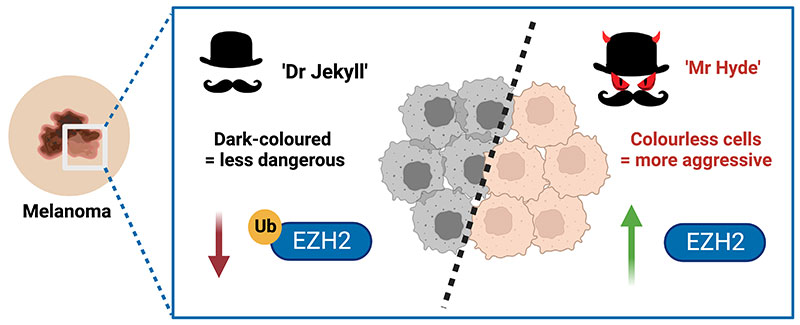
World-first research in Melbourne has discovered how a rogue protein produces ‘Dr Jekyll and Mr Hyde’ cancer cells, which could lead to improved treatments for melanoma and other cancers.
The Monash University-led study, published in the journal Oncogene, focused on a protein called EZH2, which is known to promote the development and progression of many cancer types, including melanoma and cancers of the prostate, brain, breast, and ovary.
Using laboratory models and human melanoma samples, Monash University Central Clinical School’s Cancer Development and Treatment Group found that EZH2 plays an essential role in generating more aggressive cells within tumours, a phenomenon linked to poor outcomes.
The team, led by Dr Gamze Kuser-Abali and Professor Mark Shackleton, who is also Alfred Health Director of Medical Oncology and Co-Director of the Monash Partners Comprehensive Cancer Consortium (MPCCC), found that EZH2 causes some cells to produce less melanin, a pigment molecule, resulting in dangerous ‘Mr Hyde’ cells without colour that grow faster and are more likely to spread. Their less aggressive opposite, ‘Dr Jekyll’ cells in the same tumours are darker.
The researchers now hope that drugs can be developed to reduce the amount of EZH2 in cells to reverse its cancer-promoting effect. This could turn the fast-growing, dangerous Mr Hyde cells into slow-growing Dr Jekyll cells, potentially making the tumour less aggressive.
Professor Shackleton said the discovery could potentially improve some cancer treatments.
“We know that not all tumour cells are created equal,” Shackleton said. “Inside a tumour, there are cells that grow faster and are more likely to spread than others. Some also look different.
“Our study sheds new light on the role of EZH2 in determining these differences in melanoma, offering a new potential treatment approach. By developing treatments that specifically target EZH2, we hope ultimately to improve cures and the quality of life for people affected by melanoma and other cancers driven by EZH2.”
Dr Kuser-Abali agreed: “This discovery has opened avenues for designing new treatments that could be more effective than current ones. While there are no clinical trials or studies on the horizon yet, this discovery provides hope for those affected by these deadly cancers.”
You can read the full paper in Oncogene: UHRF1/UBE2L6/UBR4-mediated ubiquitination regulates EZH2 abundance and thereby melanocytic differentiation phenotypes in melanoma. DOI:10.1038/s41388-023-02631-8
Feature image: Illustration by Jen Cheung (Research Development Manager, Medical Oncology, Alfred Health)
The Jaded Newsman’s Editor-in-Chief, Ciaran O’Mahony, and Australian journalist Bianca Roberts, have been recognised in the International Sports Press Association’s (AIPS) list of the top 36 writers in the world under 30.
Each year, the organisation holds the AIPS Sports Media awards, which honour the best sport storytellers across the globe, and is widely regarded as the highest international accolade in the sports media industry.
The fifth edition of the awards received record levels of participation, with almost 2000 submissions from 138 countries across five continents.
This is the second consecutive year that O’Mahony has been nominated in the AIPS Sports Media awards, having been shortlisted in the Best Columnists and Best Writers Under 30 categories in 2021. He was honoured with these nominations for a longform investigation into the effects of Covid lockdowns on doping testing around the world, and a feature from a multimedia series co-produced with Ms Roberts, that highlighted the rise of Rwandan football coach, Grace Nyinawumuntu.
Roberts also features in the longlist for her human-interest piece on Felicite Rwemarika, a former refugee who has become a pioneer for social change in Rwanda through her creation of women’s football programs and a national football league. The article illustrates the benefits of using football as a vehicle for women’s rights and healing in post-genocide Rwanda.
Roberts has a background in health and aged care reporting, with further experience at country newspapers and popular magazines. She is also sharing her knowledge and passion for journalism as a Visiting Instructor of Mass Communication at Abu Dhabi University.
Roberts’ commitment to incisive reporting on important social issues, policies and legislation made her an excellent fit to collaborate with The Jaded Newsman on the Rwandan women’s football series, and her dynamic skills both in print and audio were instrumental in developing what is now a multi-award winning project as well as Roberts O’Mahony Productions.
You can view the AIPS’ full longlist of the best writers in the world under 30 here.
We congratulate both journalists for their nominations and wish them luck for the remainder of the competition.
Our final instalment for National Reconciliation week 2022 – please read Ciaran O’Mahony’s investigation into the tragic closure of the remote Indigenous community of Oombulgurri.
‘A very tragic history’: how the trauma of a 1926 massacre echoes through the years
Ciaran O’Mahony
Located on the banks of east Kimberley’s Forrest River, with a scenic cliff face at its entrance, Oombulgurri boasts rare natural beauty. Few would believe this peaceful, isolated spot – only accessible by boat – has experienced so much trauma, and so recently.
Until 1969 Oombulgurri was a punitive Anglican mission called Forrest River. In 1926 tensions between Aboriginal people on the mission and residents of the nearby Nulla Nulla station, on their ancestral lands, came to a bloody head.
Some of them returned to the station and speared some cattle. Then Nulla Nulla’s co-owner Frederick Hay was murdered by an Aboriginal man named Lumbia, for the rape of his wife, Anguloo.
Police constables Graham St Jack and Denis Regan led a posse of 13 police and local white people to find Hay’s killer, taking along an arsenal of Winchester rifles, 500 to 600 rounds of ammunition, 42 horses and shotguns. They inflicted ruthless reprisal attacks on Aboriginal men, women and children at Forrest River.
Just three days shy of his 36th birthday, Rafael Nadal added another important chapter to his legacy, with his 11th Grand Slam victory over Novak Djokovic.
Although Nadal has enjoyed many victories over the Serbian in Paris, this was one of the sweetest, given that Djokovic had beaten him soundly at last year’s French Open.
In 2021, Djokovic seemed to have finally cracked the code. He used his forehand to push Nadal out wide, creating sharp angles that pinned the Spaniard to his backhand side.
With Nadal forced to hit more groundstrokes from his weaker wing, and unable to dictate the play with his heavy forehand, Djokovic picked him apart. He took control of key rallies, forcing the King of Clay to hit backhands “on the run” – over and over again.
Djokovic prevailed in 4 sets that day, en route to his his second French Open crown.
“I never thought he was unbeatable [on clay],” the World No. 1 declared in the aftermath.
Nadal seemed even more beatable this time, arriving at the tournament with little match practice and huge injury concerns. He even had his personal doctor sitting in the front row of his coaches’ box.
But as soon as this highly anticipated rematch began, it was clear that Nadal had no intention of playing “retriever” again.
Here are three key reasons why Nadal got his revenge at Roland Garros.
1. Avoiding Djokovic’s Forehand
Nadal clearly understood that Djokovic’s success last year was built around his forehand. It was the weapon that had driven him into the “double’s lines” of the backhand corner, or even off the court altogether.
Nadal kept the ball away from the Serbian’s forehand as much as possible, hitting a high percentage of his backhands down the line, rather than cross-court. Even when he found himself out of position, Nadal would send his backhand up the middle of the court. This limited the cross-court exchanges that Djokovic has often used to trap him and break his backhand down.
Djokovic’s only significant period of success on the forehand, came during the 2nd set, when he hit far more of his own backhands down the line. But he reverted back to his familiar cross-court patterns in sets 3 and 4.
For his part, Nadal made almost every forehand opportunity count, directing many of his biggest ones down the line, and maintaining a dominant court position.
2. Superior Endurance
There were serious questions about Nadal’s ability to go toe-to-toe with Djokovic over 5 sets after a marathon 4th round clash with Felix Auger-Alliassime. Djokovic arrived as the fresher player, having breezed through his first four matches, yet it was Nadal who appeared to have the stronger legs.
Both players set an unsustainable pace in the first 2 sets. The power and intensity of the rallies was staggering, but with both men pushing 36, it was never going to last. As their levels dropped in the final 2 sets, Nadal was more willing to extend the rallies and grind the match out. A huge surprise given Djokovic’s legendary fitness and the question marks over Nadal’s.
3. Out-serving Djokovic
It’s normally an extremely consistent and reliable tool, but Djokovic’s serve completely abandoned him at key moments in this match.
His first serve percentage dipped from his tournament average(prior to this match) of 71% to a measly 45%. Nadal’s, on the other hand, rose from his average of 65% to 71%.
The vast majority of Nadal’s serves targeted Djokovic’s backhand, particularly on the deuce side of the court. This forced the World No. 1 to go for low-percentage returns – either an “inside-out” backhand or a backhand down the line. When Djokovic struggled to execute these returns, Nadal either received an easy error or an offensive opportunity on his forehand. Both relieved a significant amount of pressure from his service games.
It’s National Reconciliation Week and as we reflect on the many injustices perpetrated against Aboriginal peoples, The Jaded Newsman is taking the opportunity to spotlight the Warrigal Creek massacre.
Confronting the darker elements of Australian history is crucial to fostering unity and healing, so we hope you’ll take the time to read two articles written by Ciaran O’Mahony on the shocking events at Warrigal Creek.
These articles were published by The Guardian as part of its landmark “Killing Times” project, which can be viewed here.
Living on a massacre site: home truths and trauma at Warrigal Creek
Ciaran O’Mahony
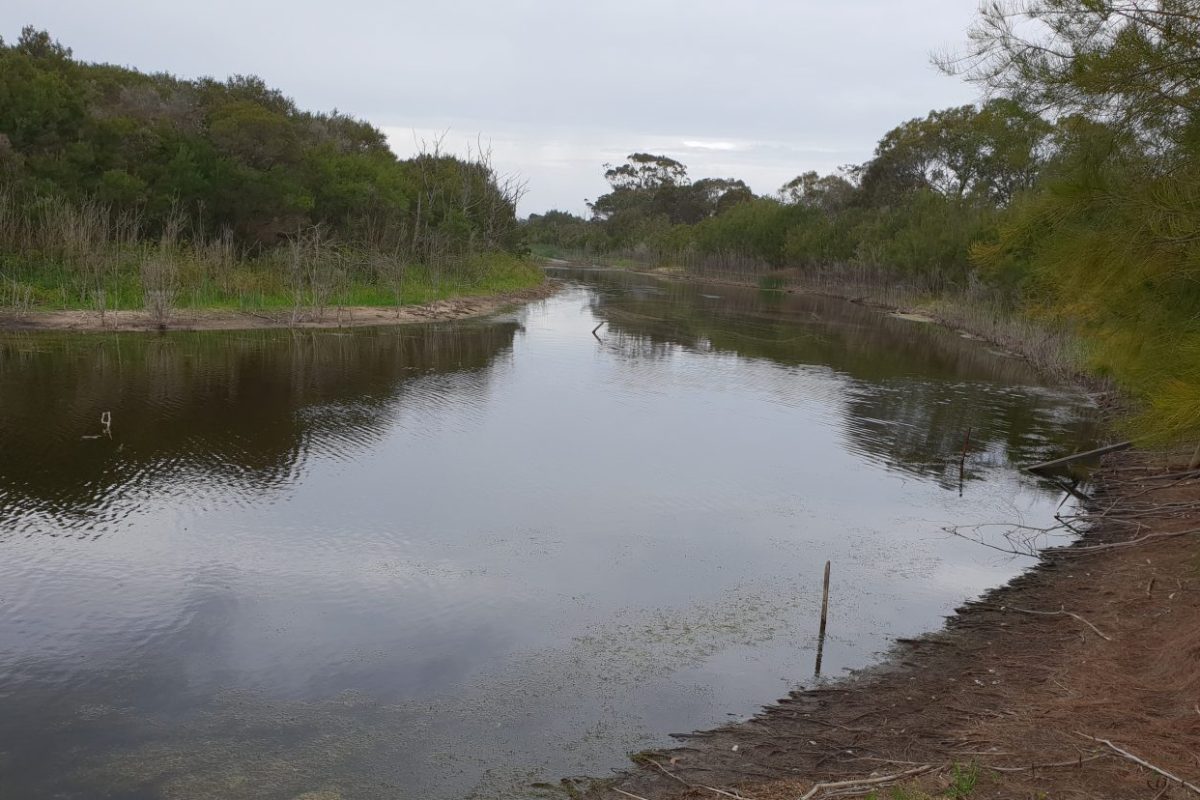
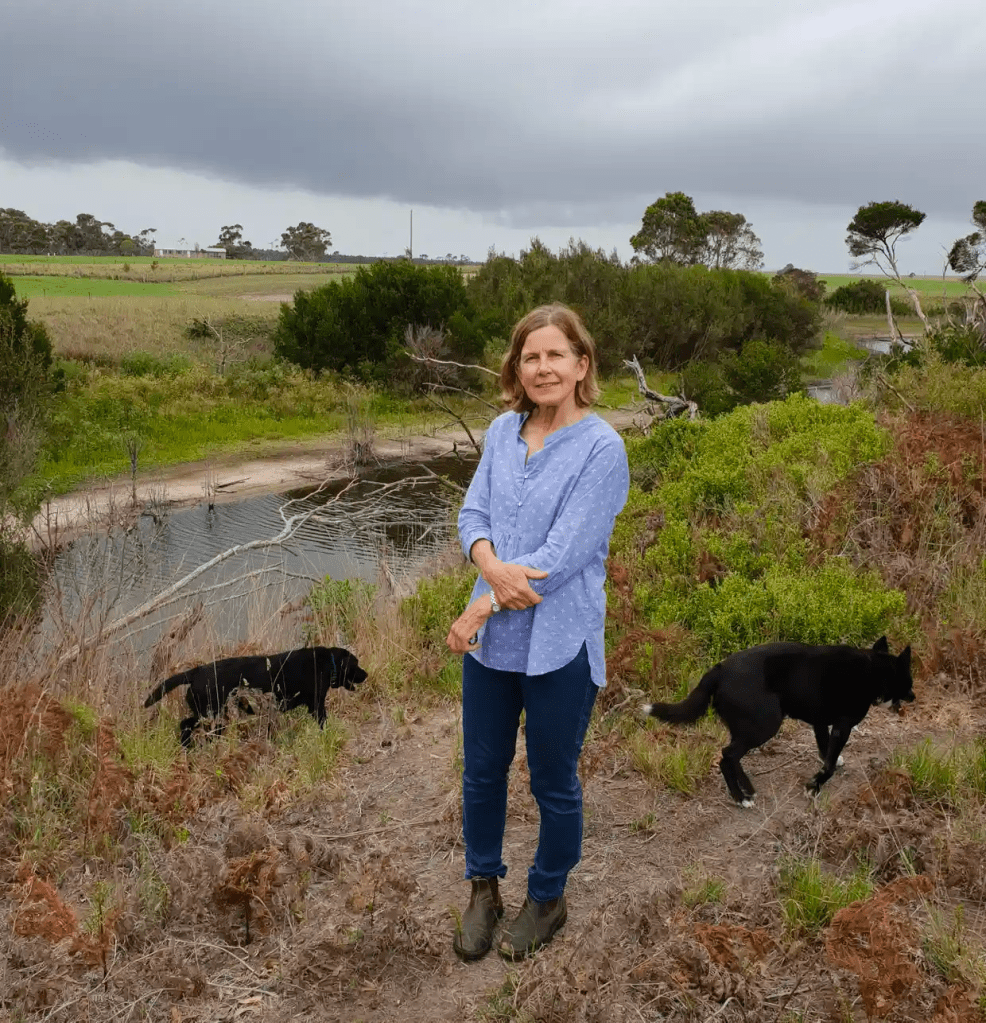
Elizabeth Balderstone leads a lifestyle that many city dwellers fantasise about, on a farm in Victoria’s Gippsland, surrounded by friendly sheep, with a humble little creek just 60 metres from her house.
But that creek, Warrigal, has seen unimaginable horrors.
The Scottish explorer who became the butcher of Gippsland
Ciaran O’Mahony
Once revered as a pioneer, the Scottish explorer Angus McMillan is now known as “the butcher of Gippsland”.
This reversal of reputation – from virtuous Presbyterian to cold-blooded killer – is the work not just of the people he wronged but of his own relations and the descendants of his closest friends.
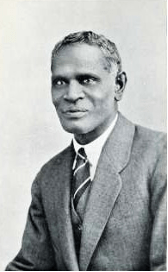
James Noble became Australia’s first Aboriginal Deacon at the height of the frontier wars.
Whilst Aboriginal people were being routinely murdered, dispossessed and enslaved, Noble found himself an unlikely, yet respected religious figure.
So how did he get there?
It might seem unusual for a traditional Aboriginal man to work for the Anglican Church, but Noble’s Great Granddaughter says he didn’t have much choice.
Badtjala and Bidjara woman, Tabatha Saunders, says “the colonials were hell bent on indoctrinating the ‘savages’” back then.
“I think he saw the way of the ‘whites’ as a portal for him to win what was really a losing battle for our people,” she says.
“If he could glide under the radar, and ‘assimilate’, he would be able to help communities in his own way.”
Rev. James Noble performing a christening at the Forrest River Mission a year before the massacre, 1925. From the State Library of WA collection, courtesy of Wilma and Harry Venville
Noble did just that, spending his youth working as a stockman in Riversleigh in the early 1890s, before moving with his employer to Invermien, New South Wales.
“He was well regarded as a good worker and as a teenager he asked to be educated. The people who owned the cattle station sent him to school. From there, he ended up in Invermien and was given private lessons,” Saunders says.
He was baptised at St Luke’s Anglican Church (NSW) in 1895, before moving back to Queensland to work as a Missionary for Revered E.R. Gribble.
As a Missionary and a Reverend (ordained in 1925), he travelled to Aboriginal communities from Palm Island to Broome, working tirelessly to help them build a brighter future. But he couldn’t do it alone.
During his travels, he was fortunate to meet a Badtjala woman named Angelina Bradley at Yarrabah Mission, Queensland.
Angelina’s journey to Yarrabah was a harrowing one. Born in K’Gari (Fraser Island), she was removed from her traditional homeland and sent to Cherbourg Mission.
Sadly, at just 14 years of age, Angelina was abducted by a horse dealer, who took her to various parts of Queensland and sexually abused her, according to Saunders.
“She was kidnapped, disguised as a boy and used as a sex slave by a pedophile,” says Saunders.
She shudders at the thought of her Great Grandmother’s ordeal – “[Being] stolen and then taken all around Queensland by this kidnapper. She was a kid for God’s sake”.
Eventually, Angelina and her captor were discovered by Police in Cairns, who freed her and sent her to Yarrabah – where she met James.
Angelina Noble (far left) with Rev. Noble (2nd from the right) and their family at the Forrest River Mission, 1925. From the State Library of WA collection. Photographer: Wilma and Harry Venville.
Angelina thrived at the Yarrabah school and would later marry and travel the country with James.
Together, they helped to found churches throughout Northern Australia and assisted the Mitchell River and Roper River Missions. They constructed houses, sheds and horse yards, delivered supplies, and cared for the sick and livestock.
Saunders feels that her Great Grandparents “beat them [white settlers] at their own game” by “keeping [Aboriginal] communities together” and spreading compassion and understanding.
Although their connection to the Church gave them some freedom and standing, the Nobles’ work and travels were not without risk.
Such was the disregard for Aboriginal life at the time that an anonymous column in the Sunday Times (March 30, 1902) noted there were “cut-throat” men throughout the Kimberley who felt “the taking of a n*****’s life was of no more consequence than the drowning of a superfluous kitten.”
Politician George Simpson even declared at the WA Legislative Council that “…it will be a happy day for Western Australia and Australia at large when the natives and the kangaroo disappear.”
Historian Dr Chris Owen confirms that “it is clear in voluminous historical records that the white colonists really didn’t even see them as human.”
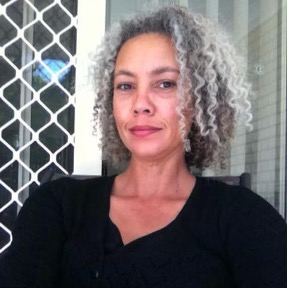
Tabatha Saunders, James and Angelina Noble’s Great Granddaughter. Photograph: Provided.
Nevertheless, James and Angelina persisted – and prevented many acts of violence that would have led to Aboriginal slaughter.
In The Reverend Ernest Gribble and Race Relations in Northern Australia, historian Christine Halse describes Rev. Noble as a dignified leader, whose reassuring presence was sorely needed at punitive Anglican Missions. Although he was not the Superintendent, Aboriginal residents saw Noble as the Mission’s “boss”.
“James’ ability to hold the Aborigines’ attention made him an invaluable preacher,” Halse writes. He was “admired and appreciated by the local tribes” and helped to prevent multiple incidents of violence between settlers and First Nations people, by communicating empathetically with both sides.
An Aboriginal woman called Lovie Kiuna told Halse of one such incident, where Noble, his wife Angelina, and a group of white missionaries, came upon an Aboriginal clan at a creek near Yarrabah:
“The river… [was] just black with Aboriginals…just watching them. Wild people…They didn’t want to see those white people cause they never saw white people in all their lives. Then [James] got up and stood at the fore of that boat. When they saw him they all put their spears down. That was that and they were all calm when they saw this…black man and he told them ‘my wife is black too but she’s half-caste’…They were satisfied with the wife too…and they all put down their spears…”
Angelina, was also instrumental in overseeing the daily care and wellbeing of Aboriginal residents at each mission. She was an important role model for young girls too, enjoying an independence that was extremely rare for Aboriginal women at that time.
In his book White Christ, Black Cross, Historian Noel Loos says Angelina’s role has sometimes been underestimated by historians.
“Because of the male domination of the Anglican Church during the nineteenth and twentieth centuries, Angelina’s role was often overlooked. She has been seen as James Noble’s support.”
“She was much more than that. Missionary women as nurses, teachers and housekeepers, interacted generally at greater human depths with Aboriginal people than most male missionaries,” he writes.
Angelina knew at least 5 Aboriginal languages and up to 14 different dialects, making her indispensable as they assisted displaced Aboriginal peoples across the country.
Her linguistic abilities also proved vital during their time at the Forrest River Mission – in WA’s East Kimberley.
Indeed, in 1926, a young woman named Loorabane arrived at the mission with a bullet wound in her leg and eyewitness testimony of police shootings of her mother and numerous Aboriginal people. She and her brother, Kangaloo, had managed to escape and sought refuge at the Mission.
These killings were carried out after the spearing of pastoralist Frederick Hay by an Aboriginal man called Lumbia, whose wife Anguloo, had been raped by Hay.
Police constables Graham St Jack and Denis Regan led a group of 11 armed locals in deadly shootings of anywhere between 30 to 100 Aboriginal people who lived at the Mission.
Angelina translated Loorabane’s and other residents’ accounts of the shootings to the head of the Mission, Reverend E.R. Gribble.
Gribble sent Rev. Noble – his best tracker – to investigate.
The stories were true. Noble followed a series of horse tracks and footprints from a small site in the East Kimberley ravine country, to a mound of ashy sand, where he uncovered numerous, charred human remains.
He also found makeshift ovens nearby, which had been dug up to burn Aboriginal victims’ bodies, and contained further bone fragments.
Noble’s discovery forced a Royal Commission into the killings, now known as the Forrest River massacre, with Angelina serving as the official translator at the trials.
Significant tampering with witnesses and evidence meant that the perpetrators ultimately walked free. Prosecution of Aboriginal murders was extremely rare and an Aboriginal couple being so prominent in the process was unprecedented. But it would have been little comfort to the Nobles after witnessing a great miscarriage of justice.
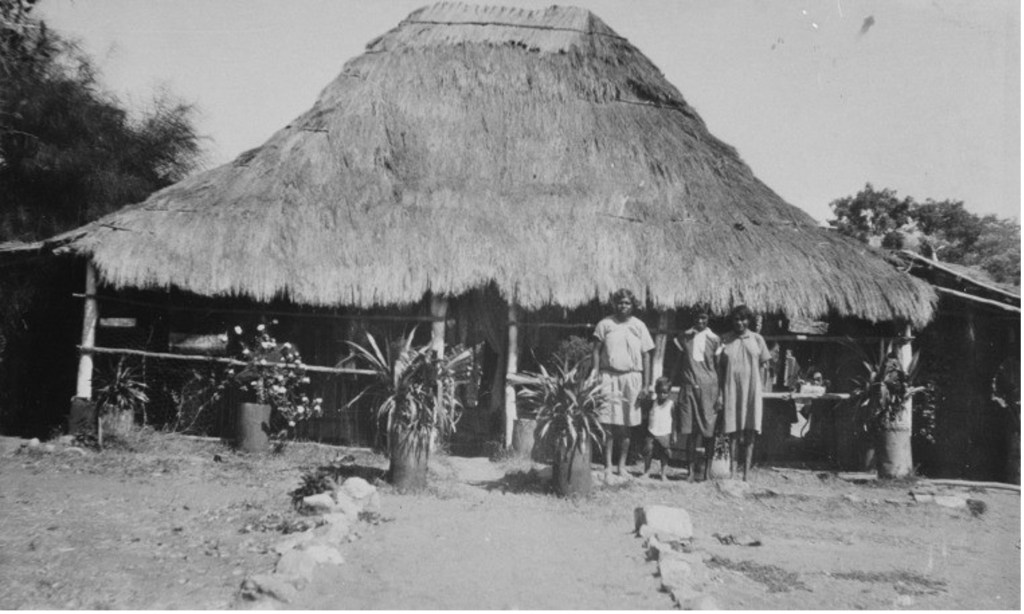
Rev. Noble’s House at the Forrest River Mission in 1925. Source: Frank Bunney Collection, State Library of Western Australia.
Still, as they had done throughout their turbulent lives, they pressed on. There was much more work to be done.
A year after the Royal Commission, 24 buildings, most of which had been built by James, stood proudly at Forrest River Mission. Many of these buildings still stand today.
Angelina taught the children and cooked for residents and staff, as the Mission’s population grew to 170.
The couple eventually returned to Yarrabah in 1934 as James’ health began to fade. He died on 25 November, 1941, while Angelina died much later on 19 October, 1964. They were survived by two sons and four daughters.
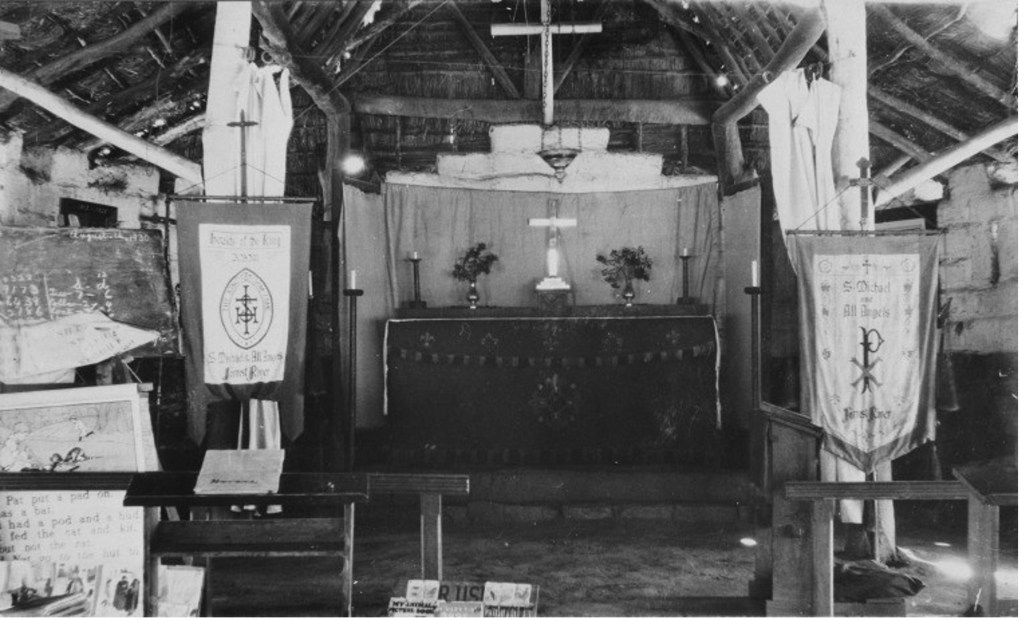
The Church where Rev. Noble preached at the Forrest River Mission, 1925. Frank Bunney Collection, State Library of Western Australia.
Tabatha Saunders feels the pride and strength of her ancestors every day, but she feels their resilience and resourcefulness, which is shared by many other Aboriginal Australians, is not highlighted enough.
Instead, harmful stereotypes persist. “I just find it sad that the racism against us is so ingrained. That we are lazy, we are alcoholics et cetera,” she says.
“It is hard as an Aboriginal person, to walk on this land and through its many countries and cities and still feel like an outsider. Fear is actually what I feel when I walk through this country,” says Saunders.
“I don’t always take on board the filthy stares and the sideward racism. But I feel them nonetheless.”
She plays her part in breaking down these stereotypes as the co-host of a radio program called “SoulJah Sistars”. The program raises awareness of the achievements of Aboriginal people and people of colour more generally, in politics, the arts and sport.
While there is still work to do, she is optimistic that a “rising tide of unity” is building.
















 The Jaded Newsman