Australians paying billions for unused parking

An RMIT University study has estimated that Aussie apartment residents are paying over $6 Billion for unused parking spaces.

The study surveyed more than 1,300 apartment residents across Melbourne, Sydney and Perth to assess the adequacy of off-street parking for apartment households.

Lead researcher from RMIT’s Centre for Urban Research, Dr Chris De Gruyter, said two-thirds of households across these cities owned the same number of cars as their allocated parking spots. 

However, 20% of households had too much allocated parking, while 14% did not have enough.

De Gruyter said the imbalance of off-site parking for apartments reflected residents not having a choice in how many parking spots they needed when renting or buying an apartment.

In Victoria, there are minimum parking provisions that state every one and two-bedroom apartment must have at least one parking spot, and apartments with three or more bedrooms must have at least two.  

“We found in our study that people living in larger apartments tend to have an oversupply of parking because of this policy, which means they’re paying for a space they’re not using,” De Gruyter said. 

De Gruyter said 13.4% of the surveyed households did not own a car but most were still allocated a parking space. 

With each parking space worth up to $100,000, he estimated the price of unused off-site parking is costing residents more than $6 billion. 

“This oversupply is not just an inefficient use of space, it is exacerbating housing affordability issues,” he said. “Meanwhile, apartment households with an undersupply of parking are forced to park on the street, competing with visitors in the area. 

“It is very clear that there is actually plenty of apartment parking – it’s just allocated incorrectly.”
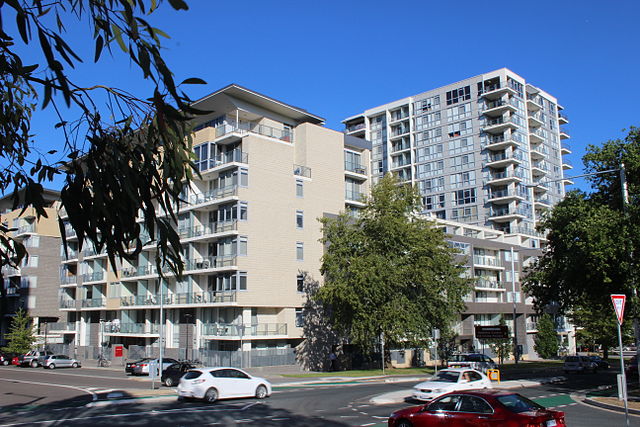
Metropolitan Apartments. Photo: Grahamec via Wiki Commons Attribution Share-Alike 3.0

The RMIT research team therefore called for state and local governments to allow for unbundled parking in planning policy to help balance the over and undersupply of off-site parking.

De Gruyter said unbundling parking was not about taking away parking from residents – it was about giving people the choice to own or rent parking spaces in line with their needs.

“We can choose the number of bedrooms we want in our homes, yet we have no say in how much parking we need.  

“We want people to have the option to choose not to have parking instead of it being imposed on them. Similarly, those who wish to have additional parking can have this.” 

Unbundled off-street parking in apartment buildings is still uncommon in Australia, but can be seen in several newer complexes, such as Melbourne Square, Indi City Sydney and Arklife in Brisbane. 

De Gruyter said it was promising to see the renewed Arden precinct in North Melbourne introduce planning policy to facilitate unbundled parking for their new buildings.  

“Unbundled parking is going to help with housing affordability, reduce car use and on-street parking issues.  

“We’re also going to see better health for residents as there will be more physical activity due to more public transport use, and better air quality from less car use.

But waiting for the market alone to bring this change would be too slow, according to De Gruyter, and state and local government have an important role to play.

Feature image: Carpark. Photo: Matt Harrop via Wiki Commons Attribution- Share Alike 2.0.
New cancer research discovers ‘Jekyll and Hyde’ cells

World-first research in Melbourne has discovered how a rogue protein produces ‘Dr Jekyll and Mr Hyde’ cancer cells, which could lead to improved treatments for melanoma and other cancers.

The Monash University-led study, published in the journal Oncogene, focused on a protein called EZH2, which is known to promote the development and progression of many cancer types, including melanoma and cancers of the prostate, brain, breast, and ovary.

Using laboratory models and human melanoma samples, Monash University Central Clinical School’s Cancer Development and Treatment Group found that EZH2 plays an essential role in generating more aggressive cells within tumours, a phenomenon linked to poor outcomes.

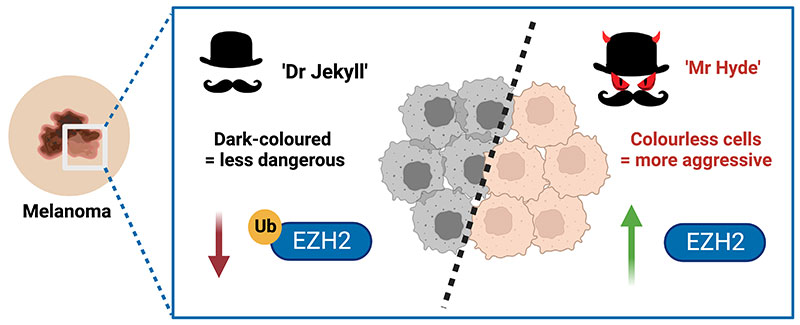
The team, led by Dr Gamze Kuser-Abali and Professor Mark Shackleton, who is also Alfred Health Director of Medical Oncology and Co-Director of the Monash Partners Comprehensive Cancer Consortium (MPCCC), found that EZH2 causes some cells to produce less melanin, a pigment molecule, resulting in dangerous ‘Mr Hyde’ cells without colour that grow faster and are more likely to spread. Their less aggressive opposite, ‘Dr Jekyll’ cells in the same tumours are darker.

The researchers now hope that drugs can be developed to reduce the amount of EZH2 in cells to reverse its cancer-promoting effect. This could turn the fast-growing, dangerous Mr Hyde cells into slow-growing Dr Jekyll cells, potentially making the tumour less aggressive.

Professor Shackleton said the discovery could potentially improve some cancer treatments.

“We know that not all tumour cells are created equal,” Shackleton said. “Inside a tumour, there are cells that grow faster and are more likely to spread than others. Some also look different. 

“Our study sheds new light on the role of EZH2 in determining these differences in melanoma, offering a new potential treatment approach. By developing treatments that specifically target EZH2, we hope ultimately to improve cures and the quality of life for people affected by melanoma and other cancers driven by EZH2.”

Dr Kuser-Abali agreed: “This discovery has opened avenues for designing new treatments that could be more effective than current ones. While there are no clinical trials or studies on the horizon yet, this discovery provides hope for those affected by these deadly cancers.”

You can read the full paper in Oncogene: UHRF1/UBE2L6/UBR4-mediated ubiquitination regulates EZH2 abundance and thereby melanocytic differentiation phenotypes in melanoma. DOI:10.1038/s41388-023-02631-8

Feature image: Illustration by Jen Cheung (Research Development Manager, Medical Oncology, Alfred Health)

O’Mahony and Roberts among AIPS’ best young reporters in the world for 2022

The Jaded Newsman’s Editor-in-Chief, Ciaran O’Mahony, and Australian journalist Bianca Roberts, have been recognised in the International Sports Press Association’s (AIPS) list of the top 36 writers in the world under 30.

Each year, the organisation holds the AIPS Sports Media awards, which honour the best sport storytellers across the globe, and is widely regarded as the highest international accolade in the sports media industry.

The fifth edition of the awards received record levels of participation, with almost 2000 submissions from 138 countries across five continents.

This is the second consecutive year that O’Mahony has been nominated in the AIPS Sports Media awards, having been shortlisted in the Best Columnists and Best Writers Under 30 categories in 2021. He was honoured with these nominations for a longform investigation into the effects of Covid lockdowns on doping testing around the world, and a feature from a multimedia series co-produced with Ms Roberts, that highlighted the rise of Rwandan football coach, Grace Nyinawumuntu.

This year, O’Mahony has been nominated for a feature on Taekwondo Instructor and athlete, David King, who represented Australia at the 2022 Oceania Taekwondo Championships just a few years after suffering a serious heart attack.

Roberts also features in the longlist for her human-interest piece on Felicite Rwemarika, a former refugee who has become a pioneer for social change in Rwanda through her creation of women’s football programs and a national football league. The article illustrates the benefits of using football as a vehicle for women’s rights and healing in post-genocide Rwanda.

Roberts has a background in health and aged care reporting, with further experience at country newspapers and popular magazines. She is also sharing her knowledge and passion for journalism as a Visiting Instructor of Mass Communication at Abu Dhabi University.

Roberts’ commitment to incisive reporting on important social issues, policies and legislation made her an excellent fit to collaborate with The Jaded Newsman on the Rwandan women’s football series, and her dynamic skills both in print and audio were instrumental in developing what is now a multi-award winning project as well as Roberts O’Mahony Productions.

You can view the AIPS’ full longlist of the best writers in the world under 30 here.

We congratulate both journalists for their nominations and wish them luck for the remainder of the competition.